From data centers to the real world
Physical AI: impacting value creation
Key takeaways
- AI value is increasingly created in real-world applications, not just cloud systems
- Edge and inference are becoming central to physical infrastructure
- Mobility and automation are early pathways for adoption
Integration across real-world environments is accelerating deployment. AI is starting to generate value outside the data center.
For the past decade, value was created inside data centers. Compute scaled, networks expanded and software platforms dominated. That model is changing.
The challenge is no longer just building better models. It is deploying intelligence in the real world, where systems must operate continuously, reliably and at scale.
As AI shifts toward deployment, new constraints emerge. Latency, power efficiency and reliability become critical because systems are no longer operating in controlled environments. Instead, they must function in dynamic, real-world conditions where performance cannot simply be reset or retrained after failure.
Wamsi Mohan, BofA Global Research's IT Hardware and Technology Supply Chain Analyst, highlighted the shift:
“Inference and edge deployment will define the next wave of AI investment.”
This reflects a move away from centralized processing toward distributed intelligence embedded directly into systems, where decisions are made closer to where data is generated.
Why mobility is emerging first
Mobility is one of the first environments where physical AI can scale.
Vehicles operate in real time, under strict safety requirements, and in constantly changing environments. This makes them ideal platforms for deploying and refining AI systems under real-world conditions.
Ming-Hsun Lee, Head of Greater China Automotive and Industrials Research at BofA Global Research, described the shift:
“AI is becoming the new engine of electric mobility, reshaping supply chains and accelerating the shift toward software-defined vehicles.”
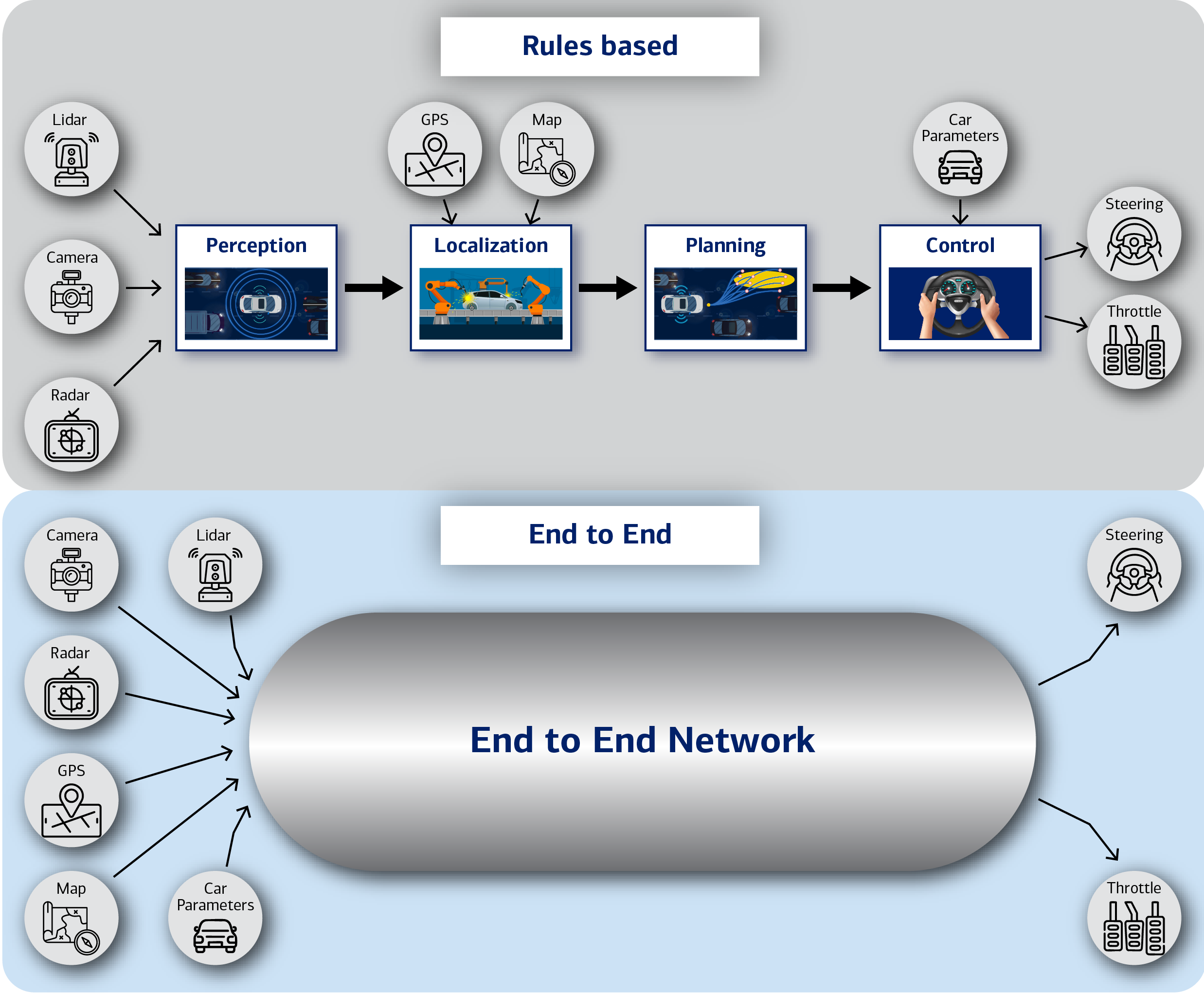
Each new generation of vehicles integrates more sensors, increased onboard computation and greater levels of automation. These vehicles are no longer just transport systems but fully integrated AI platforms operating continuously in the physical world.
The implications extend beyond mobility itself. Capabilities such as perception, decision-making and safety validation developed in vehicles can be transferred into other sectors, accelerating the broader development of physical AI systems.
Vehicles are becoming AI platforms, not just transport hardware
Source: BofA Global Research
How automation is expanding beyond fixed environments
Physical AI is extending automation into environments that were previously difficult to mechanize.
Traditional robotics operated in controlled settings where tasks were predictable and repetitive. By contrast, physical AI can operate in environments that are variable and less structured, where conditions change and tasks are not identical every time.
This includes warehouses where layouts evolve, manufacturing lines handling mixed production, and service environments where machines must interact dynamically with people.
Ming-Hsun Lee captured this shift simply:
“Robotics is emerging as a major new hardware category enabled by these advances.”
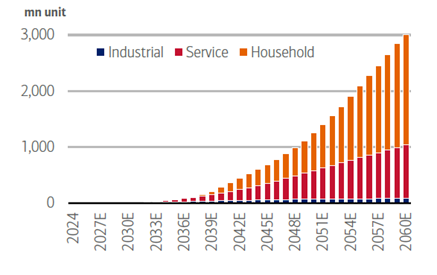
As systems become capable of adapting to variability, automation expands into a wider range of applications that were previously considered too complex for machines.
Physical AI is moving from experimentation toward scale
Source: BofA Global Research
Deploying AI in the real world is fundamentally an integration challenge rather than a standalone technology problem.
Hardware, software and infrastructure must operate together seamlessly, often in real time. Compute, sensors, energy systems and control software must be tightly coordinated to function reliably outside controlled environments.
Robert Cheng, Head of Taiwan Research and Head of Asia Tech Hardware Research at BofA Global Research, highlighted this structural shift “The AI era is structurally different from previous cycles.” Unlike earlier cycles dominated by unified platforms, AI development is now distributed across specialized components that require coherent integration. The ability to bring these components together efficiently determines how quickly these can move from development to real-world deployment.
New constraints in scaling physical AI
Winnie Wu, Head of APAC Equity Strategy at BofA Global Research, has noted that the next phase of AI scaling will depend not only on innovation, but on how infrastructure, hardware and applications evolve together over time.

Winnie Wu, BofA Global Research, shares her view on AI value creation
As AI moves into the physical world, the set of constraints expands. Power availability and energy efficiency influence where physical AI can operate, while safety requirements and regulatory frameworks determine how quickly they can be adopted. At the same time, demand for specialized talent in system validation and cross-disciplinary engineering is increasing, and maintaining reliability in unpredictable environments remains a key challenge.
Each of these factors shapes how quickly physical AI can move from early deployment to large-scale adoption.
The AI architecture evolution
Physical AI does not replace the cloud. It extends it. Data centers remain central to training and coordinating intelligence, while edge systems execute decisions in real time across different environments.
This creates a hybrid architecture in which cloud platforms generate intelligence and edge systems apply it. As a result, AI expands beyond digital platforms into a broader set of industries and use cases.
Key questions shaping the AI buildout
What is physical AI?
AI systems that operate in the real world, sensing, deciding and acting beyond purely digital outputs.
Where is it being deployed first?
Mobility, industrial automation and robotics are the earliest large-scale applications.
How does this change the AI landscape?
It expands AI beyond software into industrial systems, mobility and infrastructure.
What should be watched next?
The pace of edge deployment, growth in autonomous platforms and how quickly infrastructure and regulation adapt to support scaling.
More for you

Asia and the AI hardware era
AI is running into physical limits. The next winners will be those that can scale beyond them.
Scaling AI - Supercharging Execution
The connectivity of AI supply chains is driving ecosystem integration.