Asia and the AI hardware era
Why scaling AI is increasingly defined by system limits
Key takeaways
- AI is shifting from a model-driven cycle to a systems execution cycle
- Scaling is limited by coordination across the hardware stack, not compute alone
- Speed of global AI deployment now depends on integrated ecosystems
Over the past two years, the artificial intelligence (AI) narrative has been driven by software. Models improved rapidly, costs declined, and the dominant assumption was that intelligence would scale smoothly in the cloud.
That assumption is now breaking.
AI is no longer constrained by models. It is constrained by the infrastructure stack. As deployment expands, bottlenecks across power, memory, cooling, packaging and integration are shaping how quickly AI can scale.
As Robert Cheng, Head of Taiwan Research and Head of Asia Tech Hardware Research at BofA Global Research, noted at the BofA Global Research 2026 Asia Technology Conference:
“The next chapter of AI demands far more from hardware.”
Performance still matters, but execution now determines who scales first.
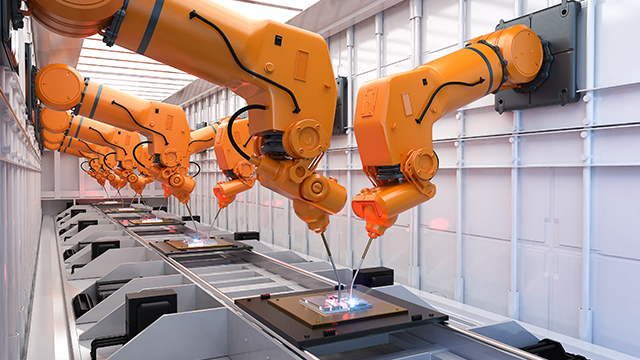
AI is moving from digital intelligence to physical execution

Source: BofA Global Research
Where scaling begins to break
AI no longer scales through a single layer. It scales through a stack, and that stack must move together.
This stack includes compute, memory, infrastructure and system integration. Each layer depends on the others, and when one lags, the entire system slows. The result is a level of interdependence that has not existed in prior technology cycles.
Wamsi Mohan, BofA Global Research's IT Hardware and Technology Supply Chain Analyst, described this shift as a redesign of the technology architecture, where deployment, integration and ongoing optimization take priority over raw compute power.
“AI is reshaping workflows, architectures and operations as companies move toward AI-ready environments where scaled deployment, integration and ongoing optimization matter more than raw compute alone.”
In practical terms, constraints now appear across multiple layers at the same time, while progress in one area exposes weaknesses in another, and delivery timelines depend on coordination rather than isolated capacity. Scaling AI is therefore less about adding more compute and more about aligning the entire system.
Where execution advantage comes from
In this new phase, advantage does not come from a single breakthrough.
Ecosystems that can connect semiconductor manufacturing, packaging, memory and system integration have a structural advantage, enabling faster iteration, shorter validation cycles and more reliable deployment when architectures evolve.
These advantages are less about individual countries and more about how different parts of the system come together. Regions with deeper engineering ecosystems can move from design to deployment more efficiently than fragmented supply chains, which becomes critical in an environment where change is constant and delays are costly.
The result is practical rather than theoretical: the ability to deliver working systems faster, with fewer capacity limits, becomes the defining competitive edge.
Performance limitation
AI performance is no longer defined by compute alone. It is defined by how efficiently the hardware ecosystem operates as a whole. Simon Woo, Head of Korea Research at BofA Global Research, pointed out that as models become more complex, “Systems require significantly higher bandwidth, more advanced memory configurations and tighter integration across components.”
Memory, in particular, has moved from being a supporting input to a key performance constraint. As a result, components are no longer independent but closely linked, efficiency and throughput matter more than peak specifications, and capital requirements increase across multiple layers simultaneously. The focus shifts from scaling individual components to optimizing the entire hardware stack.
Where AI demand is expanding next
At the same time, demand is broadening. While much of the current narrative remains focused on data centers, AI is increasingly moving into real-world applications. In areas such as mobility, industrial automation and manufacturing, AI is being embedded directly into products and operations.
Ming-Hsun Lee, Head of Greater China Automotive and Industrials Research at BofA Global Research, described this shift as “The new engine of electric mobility, reshaping supply chains and accelerating the shift toward smarter, software-defined vehicles.”
AI demand is no longer concentrated in hyperscalers. It is expanding into real-world applications, which broadens the demand base across hardware and infrastructure, accelerates adoption through real-world use cases, and increases system complexity and integration requirements. The cycle is gradually moving from centralized compute to distributed deployment.
Why infrastructure is now the key constraint
As deployment accelerates, infrastructure becomes a pressure point.
Power availability, cooling capacity and physical infrastructure cannot scale as rapidly as compute. These constraints introduce friction into deployment timelines and make execution more difficult. Winnie Wu, Head of APAC Equity Strategy at BofA Global Research, described the shift clearly:
“AI is not a single cycle but a layered upgrade across infrastructure, hardware, models, and applications.”
Each layer faces different constraints, and those in one layer can slow overall progress. Scaling AI is no longer purely a technology challenge but an infrastructure, energy and coordination challenge.
Global implications for AI scaling
The shift underway is structural. AI is no longer just a digital technology. It is becoming a physical hardware ecosystem, with dependencies across hardware, infrastructure and integration. This reframes how AI should be understood. Scaling is no longer driven solely by innovation at the model level, but by how effectively systems can be built, coordinated and deployed.
Regions and ecosystems that can align these layers gain a clear advantage in delivering AI at speed and at scale.
Key questions shaping the AI buildout
Why does Asia matter in AI?
Because core parts of the hardware and integration stack are built and coordinated there, directly affecting how quickly the AI infrastructure stack can be deployed globally.
What is the main constraint on scaling AI?
Coordination across the system, particularly across memory, packaging and infrastructure.
Why is memory so important now?
Because inference requires high bandwidth and efficiency, making memory a key driver of overall system performance.
Is AI still a software story?
Partly. But the pace of deployment is increasingly determined by hardware and infrastructure readiness.
What critical factors will shape investment decisions?
Whether bottlenecks ease at the system level, and whether deployment expands beyond centralized compute into real-world applications.
More for you
Scaling AI - Supercharging Execution
The connectivity of AI supply chains is driving ecosystem integration.

From data centers to the real world
AI is moving beyond the data center and into the physical world, reshaping industries from mobility to robotics and automation.